

Ophthalmology

Medical Tourism

LASIK Laser Eye Surgery

R3 Medical Tourism | Elite Ophthalmology Care in Tijuana, Mexico

What Is LASIK?

LASIK—an acronym for laser-assisted in situ keratomileusis—is the most widely performed elective surgical procedure in the world, having corrected the vision of more than 40 million patients globally since its introduction in the 1990s. LASIK uses two precisely controlled laser systems to permanently reshape the cornea—the clear, dome-shaped front surface of the eye that is responsible for approximately two-thirds of the eye’s total refractive power—correcting the focusing errors that cause nearsightedness (myopia), farsightedness (hyperopia), and astigmatism, and dramatically reducing or eliminating dependence on glasses or contact lenses.

The procedure involves two sequential laser steps. First, a femtosecond laser—an ultrafast, computer-controlled infrared laser that operates at one quadrillionth of a second pulse duration—creates a thin, precisely dimensioned corneal flap by delivering thousands of overlapping microbursts of energy within the corneal stroma, separating a thin lamella of tissue without incising the epithelial surface. This flap is then gently folded back to expose the underlying stromal bed. Second, an excimer laser—which emits short-wavelength ultraviolet light that ablates corneal tissue with submicron precision through a process called photoablation—sculpts the exposed stroma according to a personalized treatment map derived from the patient’s refractive error and corneal topography. The flap is then repositioned, where it adheres naturally without sutures.

Modern LASIK platforms incorporate several technological refinements that have dramatically improved outcomes compared to early-generation systems. Wavefront-guided (CustomVue) and wavefront-optimized LASIK use detailed aberrometry measurements of the eye’s optical imperfections to personalize the ablation profile, reducing the induction of higher-order aberrations and improving contrast sensitivity and night vision quality compared to standard (“conventional”) LASIK. Topography-guided LASIK integrates detailed corneal surface mapping to address irregular astigmatism and corneal surface asymmetry in addition to standard refractive errors.

eye clinic

Who Is LASIK For?

LASIK is appropriate for adults aged 18 to 21 and older whose refractive prescription has been stable for at least 12 months and who fall within the treatable range for the procedure—typically myopia up to -10.00 to -12.00 diopters, hyperopia up to +4.00 to +6.00 diopters, and astigmatism up to 5.00 to 6.00 diopters, depending on the specific laser platform. Corneal thickness is a critical eligibility criterion: candidates must have sufficient corneal thickness (typically at least 480 to 500 microns) to safely create the flap and perform the ablation while leaving an adequate residual stromal bed (generally at least 250 to 300 microns) to maintain corneal structural integrity.

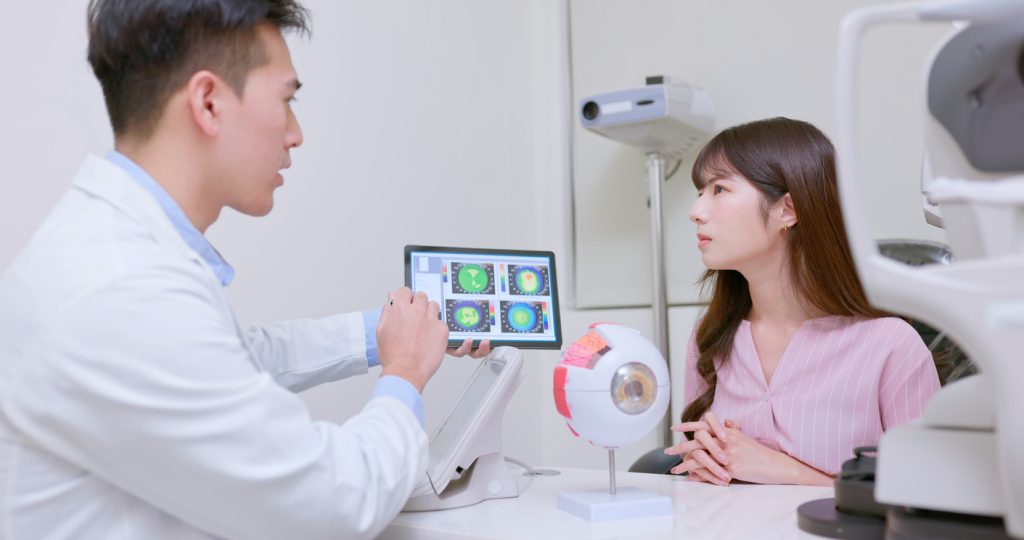
A thorough pre-operative evaluation is mandatory and includes measurement of corrected and uncorrected visual acuity, manifest and cycloplegic refraction, corneal topography and tomography (to screen for forme fruste keratoconus and other corneal irregularities), pachymetry (corneal thickness mapping), pupil size measurement in low light, tear film assessment, and a dilated fundus examination. Patients with keratoconus or pellucid marginal degeneration are not candidates for LASIK, as the procedure could further weaken an already compromised cornea. Patients with dry eye syndrome require treatment and optimization before surgery, as LASIK transiently worsens dry eye due to corneal nerve severing during flap creation.

Ideal LASIK candidates are generally healthy adults with moderate myopia or astigmatism, good corneal thickness, no significant dry eye, and realistic expectations about outcomes. Patients with very high myopia (greater than -8.00 to -10.00 diopters), thin corneas, or large pupils in low light may be better served by surface ablation procedures (PRK or LASEK) or implantable lens-based correction (ICL), which R3 Medical Tourism’s ophthalmologists evaluate as part of a comprehensive pre-operative assessment.

LASIK Surgery Treatment Videos

It is a long established fact that a reader will be distracted by the readable content of a page when looking at its layout. The point of using Lorem Ipsum is that it has a more-or-less normal distribution of letters, as opposed to using..

Frequently Asked Questions

It is a long established fact that a reader will be distracted by the readable content of a page when looking at its layout. The point of using Lorem Ipsum is that it has a more-or-less normal distribution of letters, as opposed to using..

Why Get LASIK in Tijuana, Mexico?

In the United States, LASIK surgery costs $2,000 to $3,000 per eye at most reputable laser vision correction centers—$4,000 to $6,000 for both eyes—and is universally excluded from vision insurance coverage. For many patients, particularly those who wear strong prescriptions and spend several hundred dollars per year on glasses and contact lenses, the financial case for LASIK is compelling but the upfront cost remains a significant barrier.

R3 Medical Tourism’s partner ophthalmology centers in Tijuana offer LASIK using modern excimer and femtosecond laser platforms—including wavefront-guided and topography-guided systems from leading manufacturers—at costs typically 50 to 65 percent below U.S. pricing. The ophthalmologists performing LASIK in the network are board-certified, fellowship-trained refractive surgeons with thousands of LASIK procedures in their experience, operating in accredited eye surgery centers equipped with the same diagnostic and therapeutic technology used at top U.S. laser vision centers.

The proximity of Tijuana to the U.S. border makes it ideal for this outpatient procedure. LASIK takes approximately 15 minutes per eye, and most patients achieve functional vision within 24 hours, allowing them to return home the following day. R3 Medical Tourism coordinates the full LASIK journey—pre-operative evaluation, surgery, post-operative care on day one, and a detailed follow-up plan for the patient’s home provider—ensuring a seamless, safe experience.

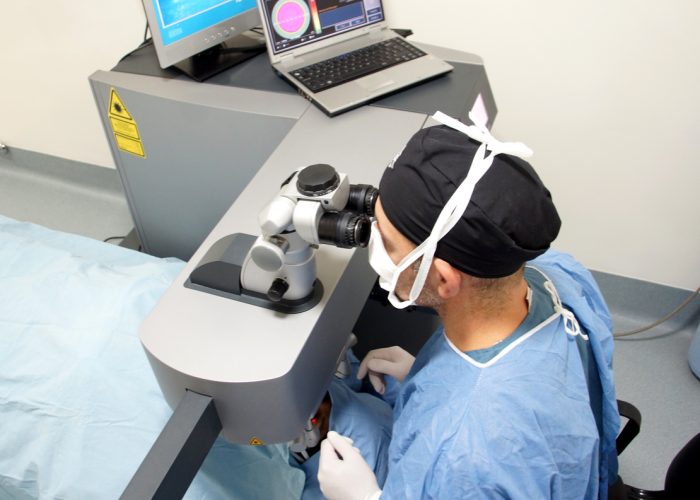
LASIK is performed as an outpatient procedure under topical anesthetic eye drops—no injections or general anesthesia are required. The patient lies on a reclining surgical chair beneath the laser system. After confirming the eye is properly aligned and the pupil is centered under the laser, a suction ring is applied to the eye to stabilize it and maintain intraocular pressure during flap creation.

The femtosecond laser creates the corneal flap in approximately 15 to 20 seconds, delivering a series of tiny laser pulses at a precisely programmed depth and diameter within the cornea. The suction ring is then removed, and the surgeon gently lifts and folds back the flap using a microsurgical instrument. The patient is asked to fixate on a blinking target light while the excimer laser delivers the ablation—a process taking 20 to 90 seconds depending on the magnitude of the correction—sculpting the stromal bed to the programmed prescription. The laser tracks the eye’s position in real time (at up to 1,000 Hz) using an active eye-tracking system, automatically pausing and resuming to compensate for any eye movement during treatment.

After ablation, the cornea is irrigated and the flap is carefully repositioned over the treated stromal bed, smoothed to eliminate wrinkles, and allowed to adhere naturally. The adhesion is confirmed by gently pressing at the flap margins. The entire procedure for both eyes typically takes 10 to 20 minutes. Patients experience some blurring and mild discomfort for the first few hours, are prescribed antibiotic and anti-inflammatory eye drops for one week, and are advised to avoid rubbing their eyes and water exposure for two weeks.

LASIK has the most extensively documented outcomes of any elective surgical procedure. A comprehensive systematic review published in Ophthalmology (Sandoval et al., 2016)—analyzing outcomes data from over 67,000 eyes treated with modern LASIK technology—reported that 99.5 percent of eyes achieved uncorrected visual acuity (UCVA) of 20/40 or better (the legal driving standard without correction), and 90.9 percent achieved 20/20 or better. Patient satisfaction rates in published surveys consistently range from 95 to 98 percent—among the highest of any elective procedure in medicine.

Predictability and safety have improved substantially with femtosecond flap creation and wavefront-guided ablation. Studies comparing bladeless (femtosecond) to microkeratome-assisted LASIK consistently show lower rates of flap complications and better optical quality with the all-laser approach. Loss of two or more lines of best corrected visual acuity (BCVA)—a key safety endpoint—occurs in less than 1 percent of eyes in modern series. The most common significant complication is post-LASIK ectasia—progressive corneal steepening caused by biomechanical weakness—which is largely preventable through rigorous pre-operative screening for subclinical keratoconus and careful flap and ablation depth planning.

Long-term stability data show that myopic LASIK outcomes are highly stable beyond the first year, with large studies reporting minimal myopic regression over 10 to 15 years follow-up in eyes without pre-operative risk factors for regression. For hyperopic LASIK, regression is more common over time, and enhancement rates at 5 to 10 years are somewhat higher. Overall, the combination of outstanding visual outcomes, high safety, rapid recovery, and decades of accumulated evidence makes LASIK the benchmark against which all refractive procedures are measured, and R3 Medical Tourism’s Tijuana ophthalmology network delivers these outcomes at a fraction of U.S. cost.

Ready to take the next step toward clearer vision? Contact R3 Medical Tourism today to connect with an elite ophthalmology specialist in Tijuana, Mexico. World-class eye care, advanced technology, and significant cost savings are within reach.

Other Available Ophthalmology

It is a long established fact that a reader will be distracted by the readable content of a page when looking at its layout. The point of using Lorem Ipsum is that it has a more-or-less normal distribution of letters, as opposed to using..

LASEK

It is a long established fact that a reader will be distracted by the readable content of a page when looking at its layout

Prk (Photorefractive Keratectomy)

It is a long established fact that a reader will be distracted by the readable content

Smile Laser Surgery

It is a long established fact that a reader will be distracted by the readable content of a page when looking at its layout

Implantable Collamer
Lens (Icl)

It is a long established fact that a reader will be distracted by the readable content

Cataract Removal With
Standard Iol

It is a long established fact that a reader will be distracted by the readable content

Cataract Removal With
Premium Iol (Multifocal / Toric)

It is a long established fact that a reader will be distracted by the readable content

Glaucoma Surgery
(Trabeculectomy
/ Tube Shunt)

It is a long established fact that a reader

Retinal Detachment Repair

It is a long established fact that a reader will be distracted by the readable content of a page when looking at its layout

Corneal Transplant
(keratoplasty)

It is a long established fact that a reader will be distracted by the readable content

Pterygium Removal

It is a long established fact that a reader will be distracted by the readable content of a page when looking at its layout

Macular Degeneration
Treatment (Anti-
vegf Injections)

It is a long established fact that a reader

Diabetic Retinopathy Treatment

It is a long established fact that a reader will be distracted by the readable content

Keratoconus Treatment
(Corneal Cross-linking)

It is a long established fact that a reader will be distracted by the readable content

Strabismus (Eye Muscle)
Surgery

It is a long established fact that a reader will be distracted by the readable content

Ptosis (Drooping Eyelid)
Correction

It is a long established fact that a reader will be distracted by the readable content

Vitrectomy

It is a long established fact that a reader will be distracted by the readable content of a page when looking at its layout

Dry Eye Treatment (Lipiflow
/ Punctal Plugs)

It is a long established fact that a reader will be distracted by the readable content

Schedule your free consultation at 80+ Centers worldwide

Success Stories

It is a long established fact that a reader will be distracted by the readable content of a page when looking at its layout. The point of using Lorem Ipsum is that it has a more-or-less normal distribution of letters, as opposed to using..

Frequently Asked Questions

It is a long established fact that a reader will be distracted by the readable content of a page when looking at its layout. The point of using Lorem Ipsum is that it has a more-or-less normal distribution of letters, as opposed to using..

Why Get LASIK in Tijuana, Mexico?

In the United States, LASIK surgery costs $2,000 to $3,000 per eye at most reputable laser vision correction centers—$4,000 to $6,000 for both eyes—and is universally excluded from vision insurance coverage. For many patients, particularly those who wear strong prescriptions and spend several hundred dollars per year on glasses and contact lenses, the financial case for LASIK is compelling but the upfront cost remains a significant barrier.

R3 Medical Tourism’s partner ophthalmology centers in Tijuana offer LASIK using modern excimer and femtosecond laser platforms—including wavefront-guided and topography-guided systems from leading manufacturers—at costs typically 50 to 65 percent below U.S. pricing. The ophthalmologists performing LASIK in the network are board-certified, fellowship-trained refractive surgeons with thousands of LASIK procedures in their experience, operating in accredited eye surgery centers equipped with the same diagnostic and therapeutic technology used at top U.S. laser vision centers.

The proximity of Tijuana to the U.S. border makes it ideal for this outpatient procedure. LASIK takes approximately 15 minutes per eye, and most patients achieve functional vision within 24 hours, allowing them to return home the following day. R3 Medical Tourism coordinates the full LASIK journey—pre-operative evaluation, surgery, post-operative care on day one, and a detailed follow-up plan for the patient’s home provider—ensuring a seamless, safe experience.

LASIK is performed as an outpatient procedure under topical anesthetic eye drops—no injections or general anesthesia are required. The patient lies on a reclining surgical chair beneath the laser system. After confirming the eye is properly aligned and the pupil is centered under the laser, a suction ring is applied to the eye to stabilize it and maintain intraocular pressure during flap creation.

The femtosecond laser creates the corneal flap in approximately 15 to 20 seconds, delivering a series of tiny laser pulses at a precisely programmed depth and diameter within the cornea. The suction ring is then removed, and the surgeon gently lifts and folds back the flap using a microsurgical instrument. The patient is asked to fixate on a blinking target light while the excimer laser delivers the ablation—a process taking 20 to 90 seconds depending on the magnitude of the correction—sculpting the stromal bed to the programmed prescription. The laser tracks the eye’s position in real time (at up to 1,000 Hz) using an active eye-tracking system, automatically pausing and resuming to compensate for any eye movement during treatment.

After ablation, the cornea is irrigated and the flap is carefully repositioned over the treated stromal bed, smoothed to eliminate wrinkles, and allowed to adhere naturally. The adhesion is confirmed by gently pressing at the flap margins. The entire procedure for both eyes typically takes 10 to 20 minutes. Patients experience some blurring and mild discomfort for the first few hours, are prescribed antibiotic and anti-inflammatory eye drops for one week, and are advised to avoid rubbing their eyes and water exposure for two weeks.

LASIK has the most extensively documented outcomes of any elective surgical procedure. A comprehensive systematic review published in Ophthalmology (Sandoval et al., 2016)—analyzing outcomes data from over 67,000 eyes treated with modern LASIK technology—reported that 99.5 percent of eyes achieved uncorrected visual acuity (UCVA) of 20/40 or better (the legal driving standard without correction), and 90.9 percent achieved 20/20 or better. Patient satisfaction rates in published surveys consistently range from 95 to 98 percent—among the highest of any elective procedure in medicine.

Predictability and safety have improved substantially with femtosecond flap creation and wavefront-guided ablation. Studies comparing bladeless (femtosecond) to microkeratome-assisted LASIK consistently show lower rates of flap complications and better optical quality with the all-laser approach. Loss of two or more lines of best corrected visual acuity (BCVA)—a key safety endpoint—occurs in less than 1 percent of eyes in modern series. The most common significant complication is post-LASIK ectasia—progressive corneal steepening caused by biomechanical weakness—which is largely preventable through rigorous pre-operative screening for subclinical keratoconus and careful flap and ablation depth planning.

Long-term stability data show that myopic LASIK outcomes are highly stable beyond the first year, with large studies reporting minimal myopic regression over 10 to 15 years follow-up in eyes without pre-operative risk factors for regression. For hyperopic LASIK, regression is more common over time, and enhancement rates at 5 to 10 years are somewhat higher. Overall, the combination of outstanding visual outcomes, high safety, rapid recovery, and decades of accumulated evidence makes LASIK the benchmark against which all refractive procedures are measured, and R3 Medical Tourism’s Tijuana ophthalmology network delivers these outcomes at a fraction of U.S. cost.

Looking Forward To Hearing From You !

Our Location

1521 E Windsor #6 Glendale CA 91205 US

Email Address

info@r3medicaltourism.com

Call Us Now

123 456 7890

Scroll to Top