

Cardiac Surgery

Medical Tourism

Coronary Artery Bypass Grafting (CABG)

R3 Medical Tourism | Elite Cardiac Care in Tijuana, Mexico

What Is Coronary Artery Bypass Grafting (CABG)?

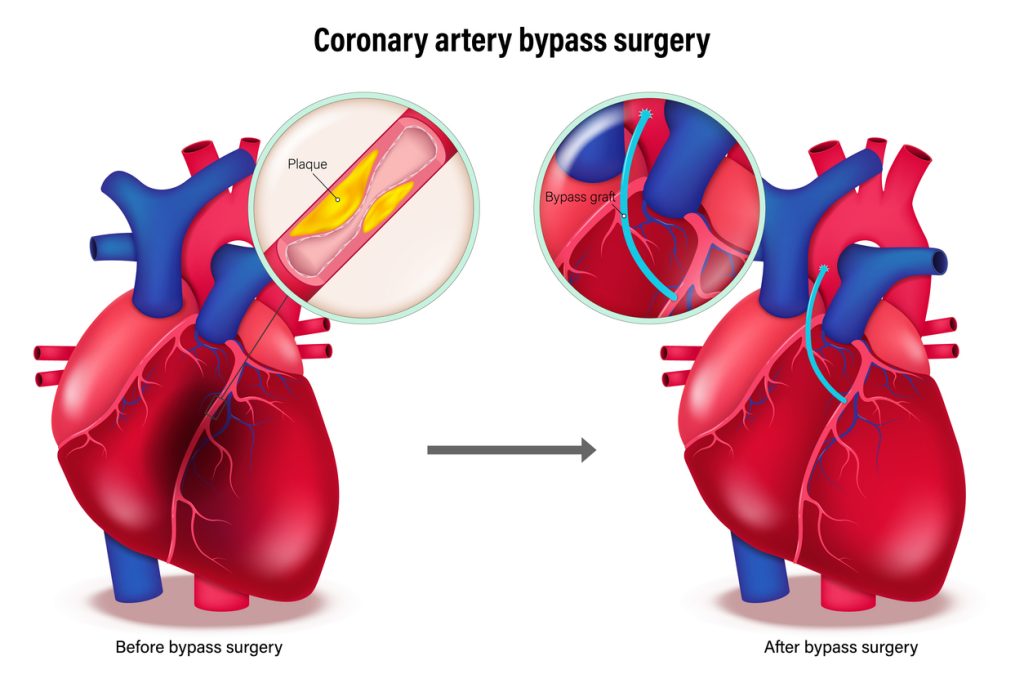
Coronary artery bypass grafting — universally known by its acronym CABG (pronounced ‘cabbage’) — is one of the most commonly performed and well-studied cardiac surgical procedures in the world. It is a major open-heart operation designed to restore adequate blood flow to the heart muscle in patients whose coronary arteries have become critically narrowed or blocked by atherosclerosis — the buildup of fatty plaques within arterial walls. Left untreated, severe coronary artery disease (CAD) deprives the heart muscle of oxygen, causing angina (chest pain), heart attacks (myocardial infarctions), heart failure, and premature death.

During CABG, a cardiac surgeon creates new routes — bypasses — for blood to travel around the obstructed segments of one or more coronary arteries. The bypass conduits are fashioned from healthy blood vessels harvested from elsewhere in the patient’s body. The most commonly used graft vessel is the internal mammary artery (IMA), which runs along the inside of the chest wall; the left internal mammary artery (LIMA) grafted to the left anterior descending (LAD) coronary artery is considered the gold standard in coronary surgery due to its outstanding long-term patency. Additional grafts may be constructed from the radial artery (forearm) or the saphenous vein (leg), allowing surgeons to bypass multiple blockages in a single operation.

CABG may be performed as an on-pump procedure — with the heart stopped and a cardiopulmonary bypass (heart-lung) machine temporarily taking over circulation — or as an off-pump procedure (beating-heart CABG), in which the surgeon operates on the contracting heart with the aid of stabilization devices. Minimally invasive CABG variants, including robotic-assisted approaches, are available at select centers for appropriate patients.

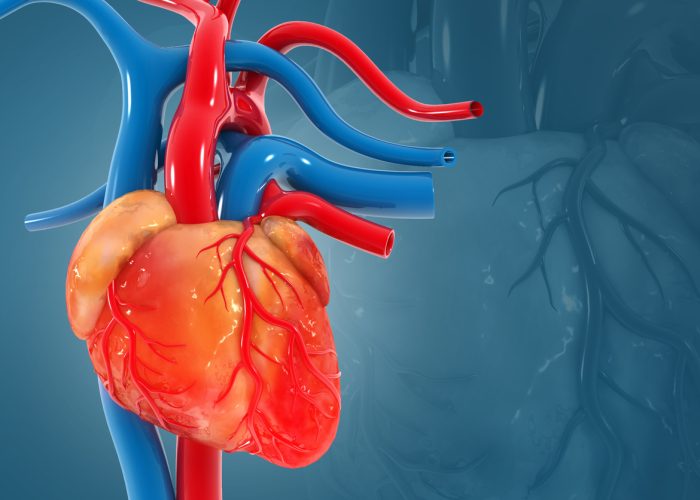
Human heart on medical background. 3d illustration

Who Is CABG For?

CABG is indicated for patients with significant obstructive coronary artery disease that poses a high risk of serious cardiac events and that is not adequately treatable by medication alone or by less invasive interventions such as angioplasty and stenting. Landmark guidelines from the American College of Cardiology (ACC) and American Heart Association (AHA) identify CABG as the preferred revascularization strategy for patients with left main coronary artery disease (stenosis of the vessel that supplies the majority of the left heart), three-vessel coronary artery disease (blockages in all three major coronary arteries), two-vessel disease involving the proximal LAD artery, and complex multivessel disease in patients with diabetes mellitus.

CABG is also the preferred approach when prior percutaneous coronary intervention (PCI/stenting) has failed or when the anatomy of the blockages makes stenting technically unfeasible. Patients with significantly reduced heart function (low ejection fraction) and multivessel disease benefit from the more complete revascularization that CABG provides compared to stenting. Age alone is not a contraindication — carefully selected patients in their 70s and 80s derive meaningful benefit — though the risk-benefit calculation becomes more complex with advanced age and multiple comorbidities.

Candidates undergo comprehensive pre-operative evaluation including coronary angiography to map the anatomy of blockages, echocardiography to assess heart function, and evaluation by a multidisciplinary heart team (cardiologist, cardiac surgeon, and anesthesiologist) to determine the optimal revascularization strategy. The decision between CABG and PCI is based on the SYNTAX score — a validated angiographic scoring system that quantifies disease complexity — alongside clinical factors.

CABG Treatment Videos

It is a long established fact that a reader will be distracted by the readable content of a page when looking at its layout. The point of using Lorem Ipsum is that it has a more-or-less normal distribution of letters, as opposed to using..

Frequently Asked Questions

It is a long established fact that a reader will be distracted by the readable content of a page when looking at its layout. The point of using Lorem Ipsum is that it has a more-or-less normal distribution of letters, as opposed to using..

Why Get CABG in Tijuana with R3 Medical Tourism?

Coronary artery disease is the leading cause of death worldwide, and CABG remains one of the most effective life-extending interventions available for appropriately selected patients. For patients who have been told they need bypass surgery, access to a skilled cardiac surgical team, a fully equipped operating room, and a robust post-operative care environment is the paramount concern — and R3 Medical Tourism’s cardiac network in Tijuana meets these standards at a fraction of the cost charged in the United States.

Tijuana’s leading cardiac surgery centers house internationally trained cardiac surgeons — many of whom completed fellowships at top programs in the United States, Canada, or Europe — operating in facilities equipped with modern heart-lung bypass machines, intraoperative echocardiography, and dedicated cardiac intensive care units. These hospitals maintain accreditation standards consistent with international best practices and provide the full infrastructure required for complex cardiac surgery and post-operative cardiac monitoring.

The financial reality of cardiac surgery in the United States is daunting: CABG carries an average total cost of $100,000 to $150,000 or more depending on the hospital, number of grafts, and length of stay. In Tijuana, comparable surgery performed by equally credentialed cardiac surgeons typically costs $15,000 to $30,000 — a savings of 75 to 85 percent. For uninsured or underinsured patients, or those facing high out-of-pocket costs despite insurance, this difference is not merely a convenience — it is the factor that determines whether life-saving treatment is accessible at all.

The patient is admitted one to two days before surgery for pre-operative evaluation, optimization of medications, and preparation. On the day of surgery, general anesthesia is induced and a breathing tube (endotracheal tube) is placed. Continuous monitoring lines — including an arterial line, central venous catheter, and Swan-Ganz pulmonary artery catheter in complex cases — are placed to allow real-time hemodynamic monitoring throughout the procedure.

For conventional on-pump CABG, a median sternotomy (vertical incision through the breastbone) provides access to the heart. The pericardium is opened, and the heart-lung machine is connected via cannulas in the aorta and right atrium. The heart is stopped using cold cardioplegia solution, and the surgeon harvests the graft vessels — LIMA via direct dissection from the chest wall, saphenous vein via leg incision or endoscopic harvesting, radial artery via forearm incision. Each bypass graft is then sewn precisely to the coronary artery downstream of the blockage using fine sutures (7-0 or 8-0 polypropylene) under magnification, and the proximal ends are connected to the aorta. After all bypasses are completed, the heart is restarted, weaned from bypass, and the chest is closed in layers over drainage tubes.

For off-pump CABG, mechanical stabilizers immobilize the targeted coronary vessel segment while the heart continues beating, allowing the surgeon to sew the graft without stopping the heart. Recovery from surgery involves a cardiac ICU stay of 1–3 days, followed by a general ward stay of 4–7 days. The sternotomy heals over 6–8 weeks, during which heavy lifting and strenuous activity are restricted. Cardiac rehabilitation — a supervised exercise and education program — begins 4–6 weeks post-operatively and significantly improves long-term outcomes.

CABG is one of the most extensively studied surgical procedures in medicine, with outcome data spanning more than five decades. The landmark SYNTAX trial, published in the New England Journal of Medicine, established that CABG is superior to drug-eluting stenting for patients with three-vessel or left main coronary artery disease in terms of major adverse cardiac and cerebrovascular events (MACCE) at five years — a finding confirmed and extended in subsequent follow-up analyses at ten years. For high-complexity disease (SYNTAX score >32), CABG reduces the composite endpoint of death, myocardial infarction, and repeat revascularization by approximately 30% compared to PCI.

The LIMA-to-LAD graft has a patency rate exceeding 90% at ten years, significantly outperforming saphenous vein grafts (which have patency rates of approximately 60% at ten years without medical optimization). Contemporary surgical techniques, including total arterial revascularization using both mammary arteries or radial artery grafts, have further extended long-term graft patency and survival benefits.

Operative mortality for elective CABG in low-to-moderate risk patients at experienced centers ranges from 1 to 3 percent, as reported by the Society of Thoracic Surgeons (STS) National Database. Stroke risk is approximately 1–2% for on-pump CABG. Quality of life improves substantially for the vast majority of patients: the MASS-II trial demonstrated persistent freedom from angina in over 80% of CABG patients at five years. Long-term survival benefit is well-documented, particularly for patients with left main disease and reduced ejection fraction, for whom CABG improves survival compared to medical therapy alone.

Ready to take the next step? Contact R3 Medical Tourism today to connect with an elite cardiac specialist in Tijuana, Mexico. World-class cardiovascular care, exceptional outcomes, and significant cost savings are within reach.

Other Available Cardiac Surgeries

It is a long established fact that a reader will be distracted by the readable content of a page when looking at its layout. The point of using Lorem Ipsum is that it has a more-or-less normal distribution of letters, as opposed to using..

Heart Valve Repair

It is a long established fact that a reader will be distracted by the readable content of a page when looking at its layout

Heart Valve Replacement

It is a long established fact that a reader will be distracted by the readable content of a page when looking at its layout

Angloplasty And
Stenting

It is a long established fact that a reader will be distracted by the readable content

Pacemaker Implantation

It is a long established fact that a reader will be distracted by the readable content of a page when looking at its layout

Implantable Cardioverter Defibrillator (ICD)

It is a long established fact that a reader will be distracted by the readable content

Atrial Fibrillation (AFIb) Ablation

It is a long established fact that a reader will be distracted by the readable content

Aortic Aneurysm Repair

It is a long established fact that a reader will be distracted by the readable content of a page when looking at its layout

Transcatheter Aortic
Valve Replacement (TAVR)

It is a long established fact that a reader will be distracted by the readable content

Cardiac Catheterization

It is a long established fact that a reader will be distracted by the readable content of a page when looking at its layout

Congenital Heart Defect
Repair

It is a long established fact that a reader will be distracted by the readable content

Carotid Artery Surgery

It is a long established fact that a reader will be distracted by the readable content of a page when looking at its layout

Peripheral Artery
Disease Treatment

It is a long established fact that a reader will be distracted by the readable content

Ventricular Assist
Device (VAD) Implantation

It is a long established fact that a reader will be distracted by the readable content

Heart Failure Management/LVAD

It is a long established fact that a reader will be distracted by the readable content

Cardiac Electrophysiology Studies

It is a long established fact that a reader will be distracted by the readable content

Schedule your free consultation at 80+ Centers worldwide and start your journey to better care.

Success Stories

It is a long established fact that a reader will be distracted by the readable content of a page when looking at its layout. The point of using Lorem Ipsum is that it has a more-or-less normal distribution of letters, as opposed to using..

Looking Forward To Hearing From You !

Our Location

1521 E Windsor #6 Glendale CA 91205 US

Email Address

info@r3medicaltourism.com

Call Us Now

123 456 7890

Scroll to Top